The R250pm Movement
The R250pm Movement
South Africa doesn’t have a poverty problem.
It has coordination problem.
We have talent. We have land. We have communities. We have heritage. We even have money moving through the economy every month.
But we don’t have enoughtrust infrastructure— the boring, powerful systems that turn goodwill into working projects: governance, documentation, legal clarity, compliance, reporting, and the ability to defend decisions.
That is what RACC is building.
Not by waiting for a billionaire.
Not by begging for a once-off grant.
Not by chasing the next “initiative”.
By doing the most modern thing possible.
A national subscription model.
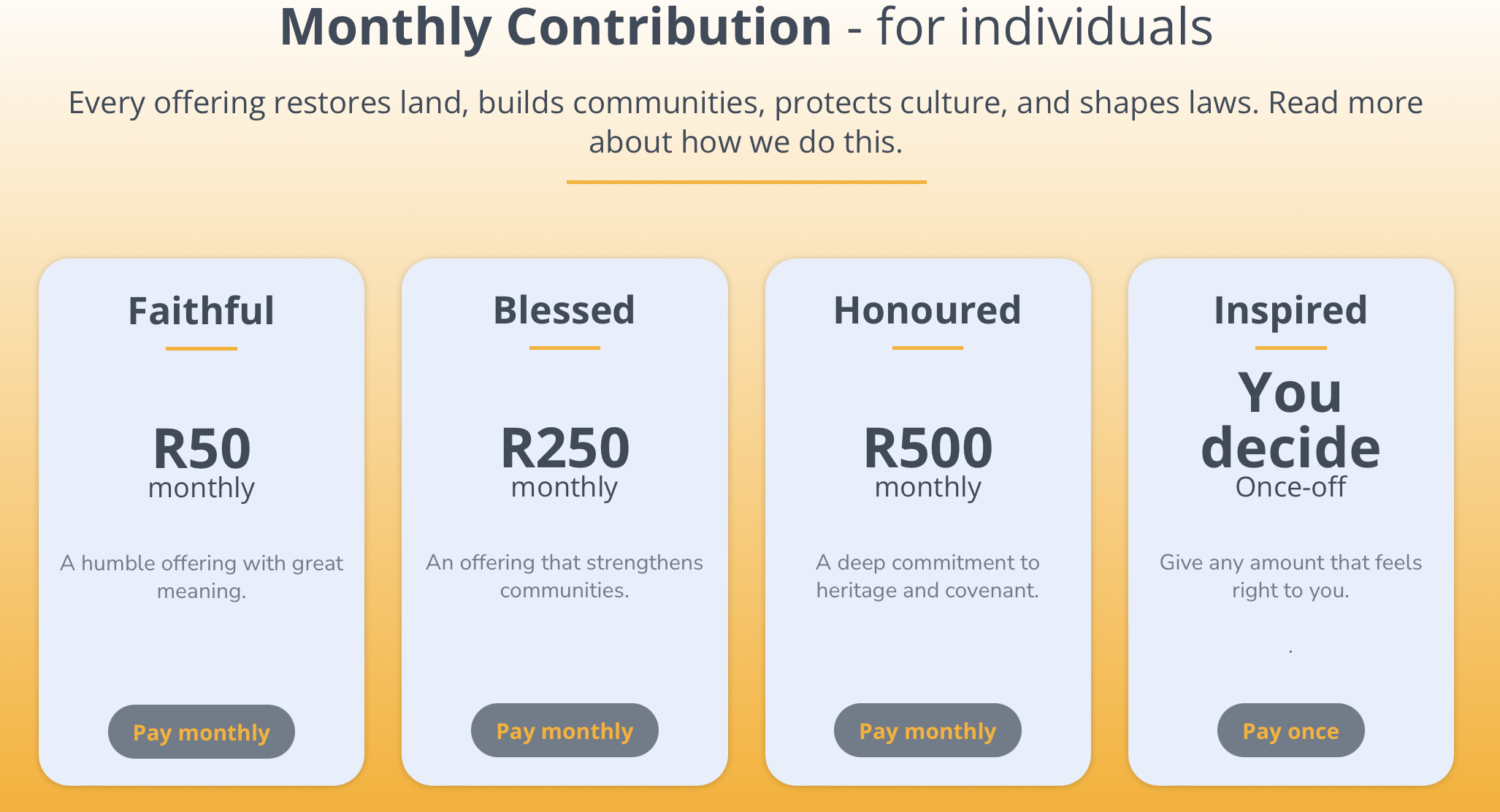
A million Black middle-class employees contributing R250 per month to create a community-funded platform for:
investable rural projects
legal advocacy and land governance clarity
professionalised reporting and accountability
cultural protection that can be defended in law and policy
This is not charity.
This is national capability funded like a service.
Why subscriptions beat donations
A donation is emotional.
A subscription is structural.
A donation says: “I feel something today.”
A subscription says: “I back this outcome every month until it becomes normal.”
That difference is everything — because the hard work of development is not the first meeting or the first photo.
Subscriptions fund the invisible machinery that makes projects durable — and therefore fundable.
The maths is simple — and that’s the point
If 1,000,000 people give R250 per month:
That’s R250 000 000 per month
That’s R3 000 000 000 per year
Not hypothetically. Mechanically.
And here’s the behavioural truth: R250 is not big money to one person. But it is nation-shaping money when it becomes a habit across a million people.
That’s the entire model:
Small contributions. Massive coordination. Permanent capacity.
The real product isn’t “funding” — it’s trust
Most rural projects fail at the same point:
They cannot prove they are governable.
Funders don’t reject communities because they hate rural people.
They reject them because they can’t defend risk.
So RACC builds what donors and investors actually buy:
1) Governance that stands up in daylight
clear mandates and council resolutions
roles, approvals, minutes, accountability
documented community consent pathways
2) Compliance readiness
registration alignment (entities, PBO/NPO where relevant)
tax and regulatory hygiene
ongoing “good standing” discipline
3) Financial reporting that creates confidence
budgets, cashflow logic, controls
reporting cadence donors can rely on
clean audit trails, independent verification support
4) Legal and policy capability
land and tenure documentation support
advocacy that is evidence-based, not emotional
protection against opportunistic encroachment and extractive deals
This is how projects become investable rather than merely “important”.
Three examples of what R250/month actually builds
Example A: The “Investment Readiness Pack”
A royal council has a water project, clinic upgrade, or community agriculture plan — but donors won’t touch it.
RACC funds the readiness pack:
governance documents (authority, mandates, approvals)
project scope, milestones, measurable outputs
budget + procurement controls
reporting templates + accountability map
Result: The project moves from appeal to bankable proposal.
Example B: The “Land Evidence File”
A community has customary land claims but weak documentation. That means:
developers push boundaries
mining interests negotiate with the wrong parties
the community becomes legally “soft”
RACC funds the file:
customary evidence compilation
mapping and boundary narratives
affidavits, minutes, lineage references, historical usage records
a defensible dossier for lawful engagement
Result: land stops being emotional — it becomeslegible in law.
Example C: The “Donor Reporting Machine”
A donor wants to fund rural development, but fears reputational damage:
money disappears
projects stall
reporting collapses
RACC funds:
standard reporting cycles
transparent public dashboards (where appropriate)
independent verification support via professional partners
escalation pathways when things go wrong
Result: donors stop “testing rural projects” and start committing to them.
The closing truth
A million people giving R250 is not about money.
It’s about who gets to set standards.
Because the group that funds the platform becomes the group that can defend:
governance
land justice
cultural legitimacy
investable rural development
And once that machine exists, it doesn’t beg for attention.
It quietly changes what is possible.
Poverty will not be solved by speeches in Sandton — but by systems that make rural projects fundable, governable, and defendable.
If you want a country where tradition is not symbolic, where rural development is not a promise, and where land and governance are not negotiated from weakness…
Then don’t wait for rescue.
Support an investment-readiness pack for a rural project.